How to Have a Thoughtfully Sustainable Weekend in New York City
We’re back from our long-anticipated winter weekend in New York City, and as I look back on the trip, what stands out most isn’t how much we saw — it’s how we experienced the city.
From taking the train instead of driving, to walking miles between landmarks, to pausing and noticing the design, engineering, and history behind what we were seeing, this trip naturally aligned with so many of the values I try to model for my kids — curiosity, sustainability, and real-world STEM learning.
This trip was also an extension of something I’ve been thinking a lot about lately: choosing experience gifts over more stuff. This NYC weekend was the experience we gifted our kids over Winter Break, and if you’re curious how we shared that gift with them ahead of time, I wrote more about it here: How Do You Wrap an Experience Gift?
It’s a mindset I return to often when sharing ideas for STEM-rich travel experiences for families — learning doesn’t stop when you leave the classroom.
This post contains a few affiliate links. If you choose to click and explore, you help support the free educational content I share here at Thoughtfully Sustainable — thank you for learning alongside us.
Friday: Arriving by Train & Exploring Midtown on Foot
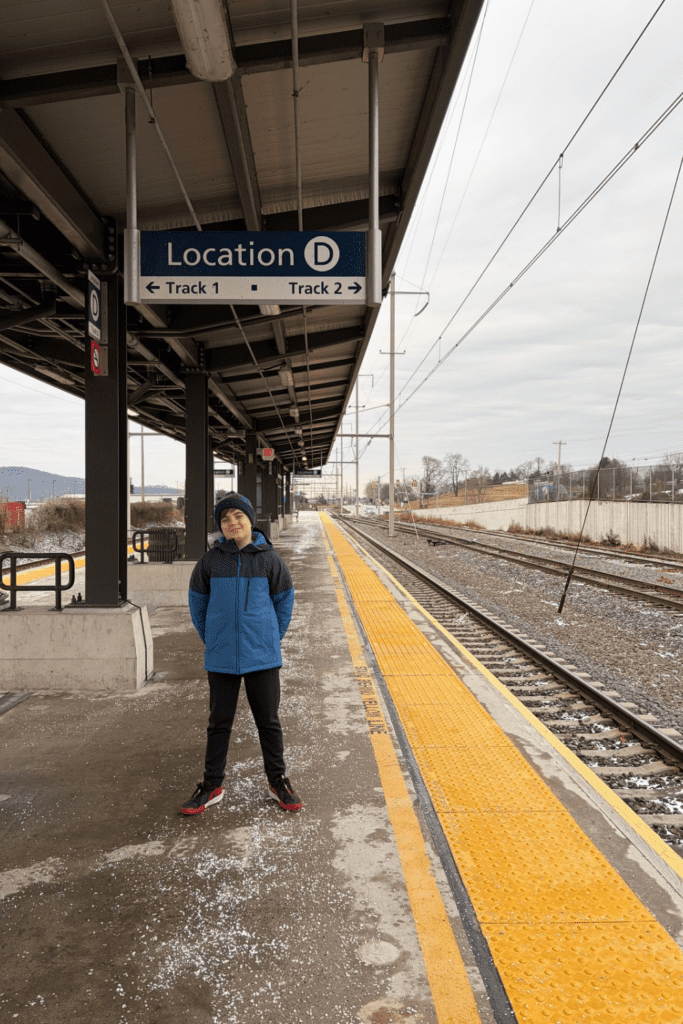
We arrived at Penn Station’s Moynihan Train Hall around noon, which immediately set the tone for the trip. Choosing to travel by train felt like a small but important sustainability win — fewer emissions than driving or flying, and the ability to arrive right in the heart of the city.
Whenever possible, we try to choose transportation options that align with more sustainable family travel practices, and train travel continues to be one of our favorites.
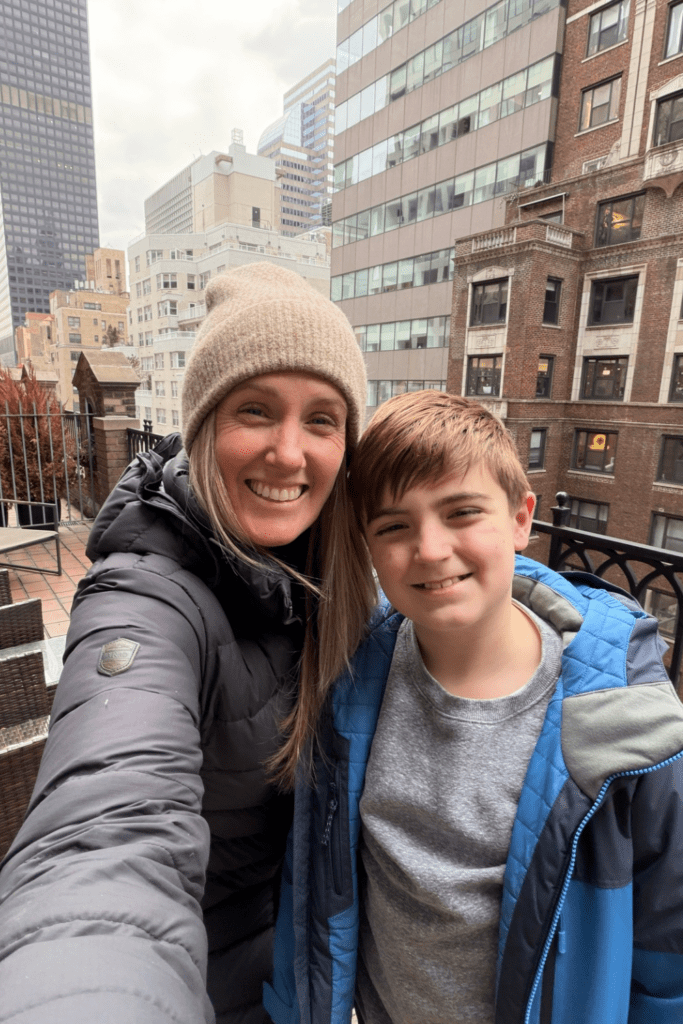
After a quick car ride to The Lombardy Hotel to drop off our bags, we set out on foot — one of the best ways to experience New York City.
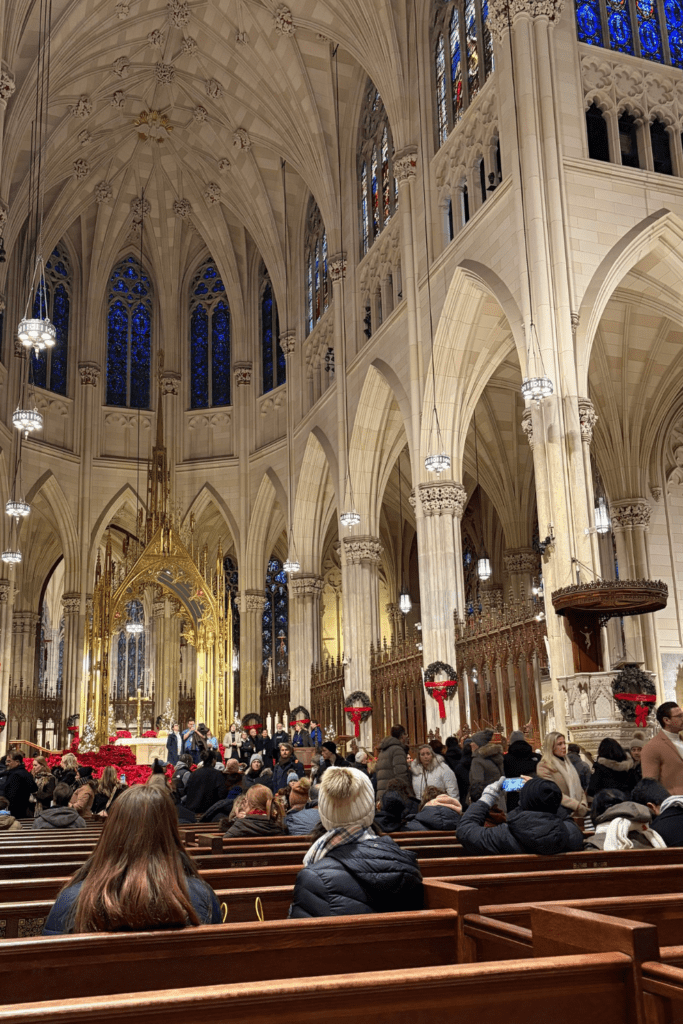
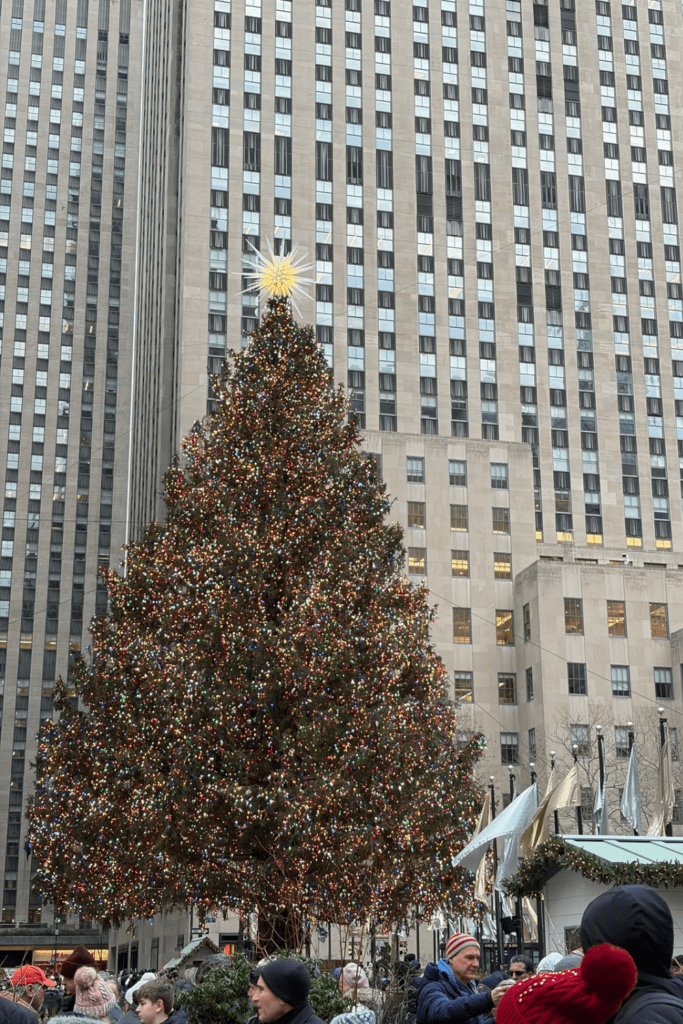
Rockefeller Center, St. Patrick’s Cathedral & Architecture Everywhere
Our afternoon walk took us past Rockefeller Center, the iconic Christmas tree, and into St. Patrick’s Cathedral. Walking into the cathedral never gets old — the scale, symmetry, arches, and light are a masterclass in architecture.
For kids, this is such a powerful way to see math, geometry, and engineering principles come to life. You don’t need a worksheet — just looking up does the teaching.
LEGO Store (Saved for Later!)
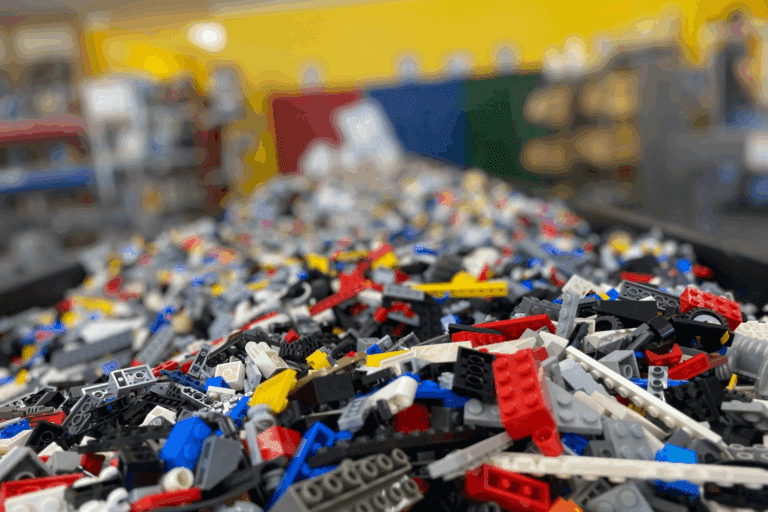
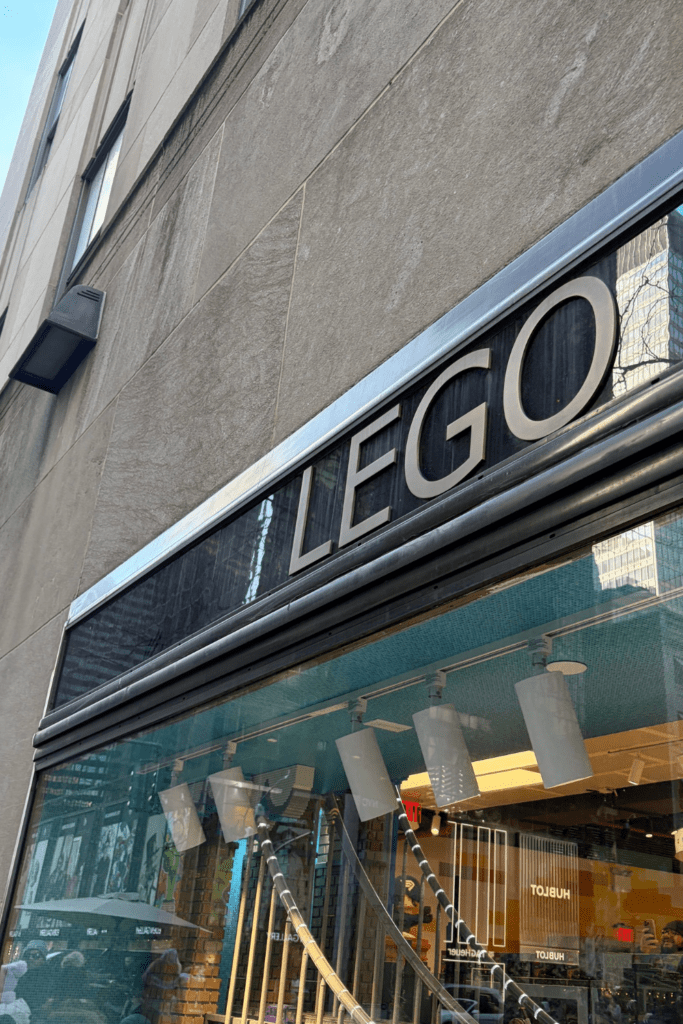
We stopped by the LEGO Store across from St. Patrick’s Cathedral, but the line was wrapped around the block, so we made a strategic decision to save it for Sunday morning. LEGO continues to be one of our favorite examples of a toy that supports STEM learning and sustainability through creativity, reuse, and open-ended play.
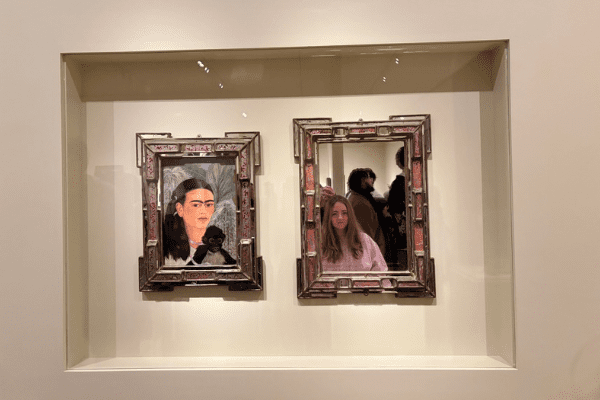
Museum of Modern Art (a.k.a. MoMA)
We wrapped up the afternoon at The Museum of Modern Art. Seeing Starry Night by Van Gogh in person was a highlight for both kids — a reminder that art museums aren’t just for adults. We took advantage of the museum’s later Friday hours, giving us the opportunity to explore the floors at our own pace. Parenting win – children 16 and under get admitted to the museum for free any day of the week!
We also spent time with works by Frida Kahlo, which opened up a very different kind of conversation. Seeing her paintings displayed at MoMA was a powerful opportunity for our kids to learn how artists use their work to tell personal stories — about identity, culture, resilience, and lived experience. Frida Kahlo’s art shows that creativity isn’t just about technique; it’s about perspective, emotion, and using your voice. Experiencing her work in a museum setting helped reinforce that art, like STEM, is another way people make sense of the world and leave a lasting impact.
Art museums offer incredible opportunities to explore observation, pattern recognition, and emotional storytelling — all skills that connect beautifully with the same curiosity we encourage through hands on STEM learning.
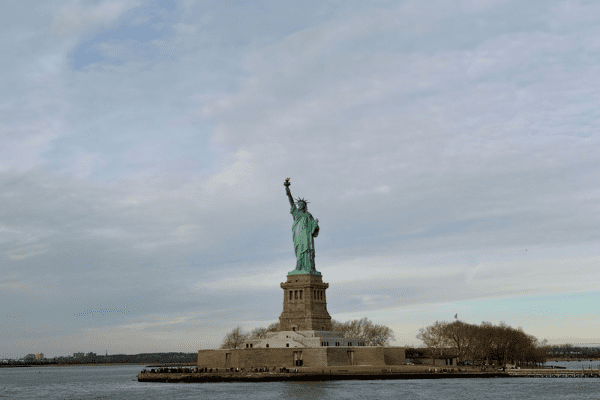
Saturday: Lady Liberty, Ellis Island, & More Manhattan Memories
Statue of Liberty Pedestal Reserve: Engineering, Design & Planning Tips for Families
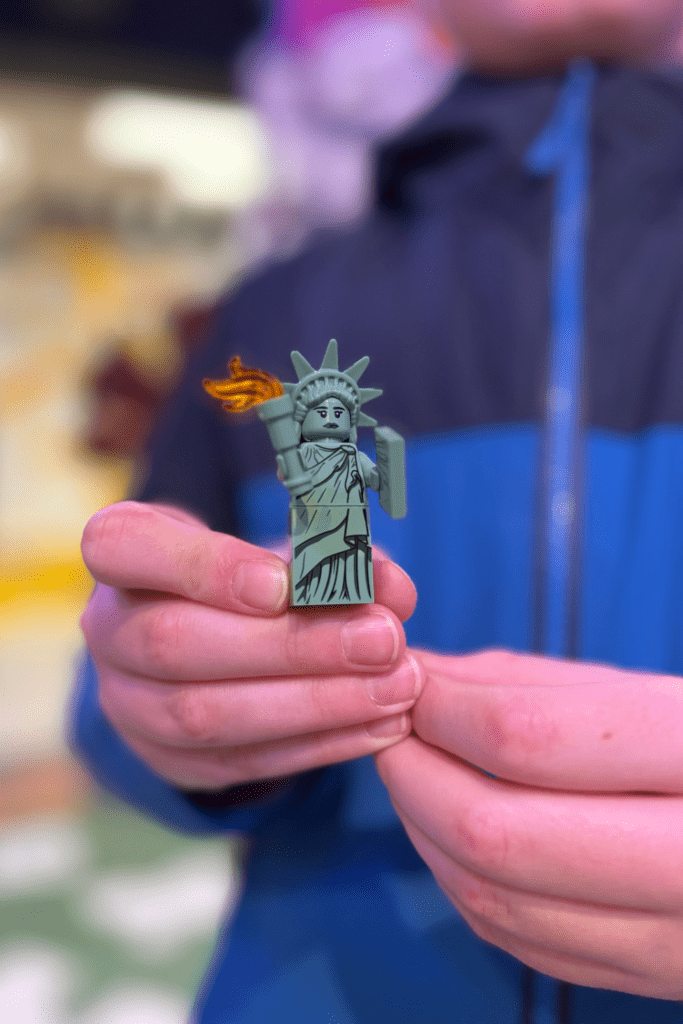
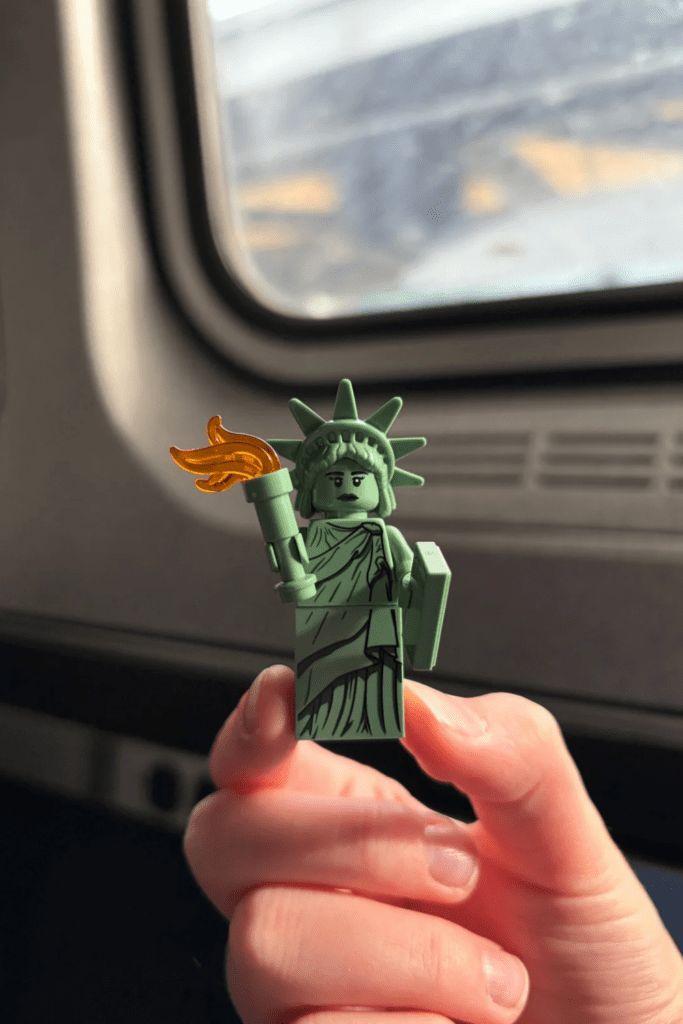
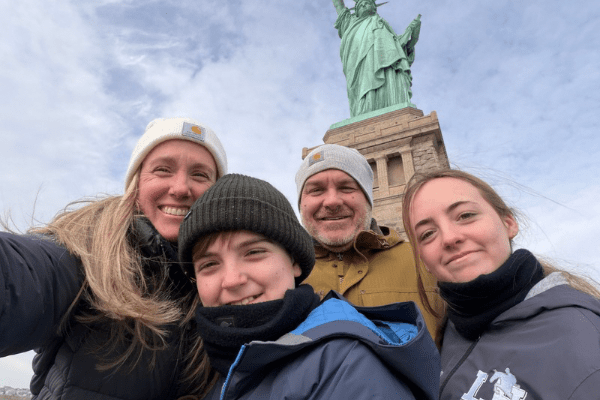
Saturday morning was dedicated to the Statue of Liberty. With a 10 AM departure, we arrived at Battery Park by 9:30 for security screening at Castle Clinton National Monument.
Before diving into the experience itself, it’s worth sharing a few practical details that made the day smoother for us — especially for families visiting with kids.
Helpful Planning Tips for Visiting the Statue of Liberty
Statue City Cruises is the only legitimate ferry service that transports visitors to and from Liberty Island and Ellis Island. If you’re booking tickets, this is the official provider authorized by the National Park Service.
Security screening is very similar to airport security, so plan extra time and pack accordingly. One important thing to know: no backpacks are permitted if you plan to climb up to the pedestal or the crown.
Lockers are available on Liberty Island for storing personal items. They cost 25 cents, and a helpful National Park Service attendant is on hand to walk you through the process. One fun detail our kids loved: you actually get your quarter back once you’re finished using the locker.
The STEM Behind Lady Liberty
Beyond the iconic views, the real STEM magic happens once you start learning how the statue was designed and built.
The Statue of Liberty was designed by Frédéric Auguste Bartholdi, the French sculptor responsible for the statue’s exterior form and symbolism. The internal structure — the engineering that allows the statue to stand, sway, and endure — was designed by Gustave Eiffel, the same engineer behind the Eiffel Tower.
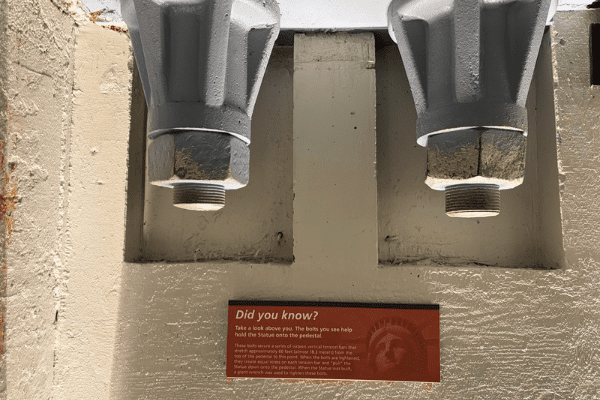
As you ascend the stairs inside the statue, look up. You’ll see the intricate internal support system that lies beneath the copper exterior — a lattice of iron that allows the statue to move slightly with the wind and temperature changes. Seeing this framework in person makes abstract engineering concepts like structural support, load distribution, and materials science suddenly very real.
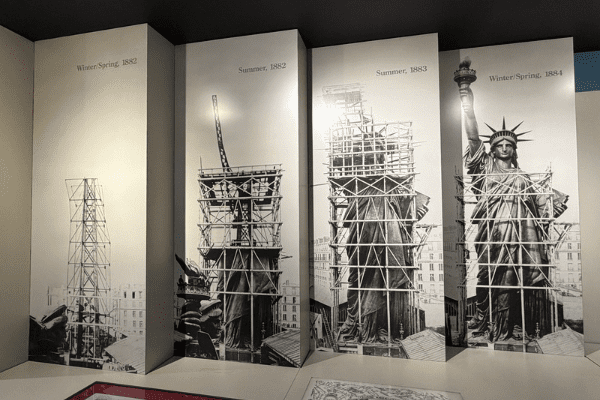
The Statue of Liberty Museum further highlights these engineering challenges, from the statue’s original construction to its assembly, transportation across the Atlantic, and long-term preservation. It’s an incredible example of how art, engineering, and innovation work together.
Pedestal vs. Crown Tickets: What Families Should Know
If visiting the Statue of Liberty is on your family’s itinerary, it’s important to know that access beyond Liberty Island requires advance planning.
Families who want to climb inside the statue to the pedestal or all the way up to the crown must purchase those tickets ahead of time. We were able to secure pedestal reserve tickets a few weeks in advance, which allowed us to explore the museum and climb up inside the statue.
Crown tickets, however, sell out much farther in advance — often months ahead — and were already unavailable by the time we booked. If climbing to the crown is a must-do for your family, it’s best to plan well ahead and purchase tickets as soon as your travel dates are set.
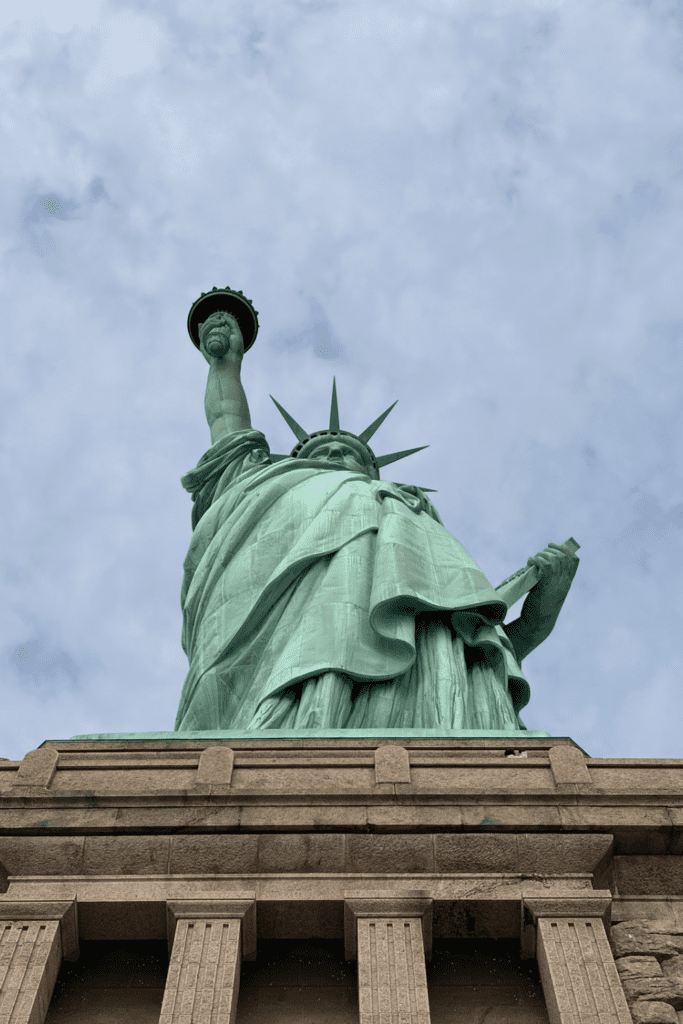
Even without crown access, the museum and pedestal experience offered a rich look at the engineering, design, and history behind Lady Liberty.
Ellis Island: Immigration History, Architecture & Stories That Matter
After finishing our time on Liberty Island, we hopped back aboard the ferry and continued on to Ellis Island — a stop that added an important layer of context and meaning to the day.
Ellis Island served as the primary immigration processing center for the United States from 1892 to 1954. More than 12 million immigrants passed through here, many arriving with little more than hope, determination, and the belief that a better future was possible. Walking through the space made it easier for our kids to understand that New York City isn’t just a place of landmarks — it’s a place shaped by people and their stories.
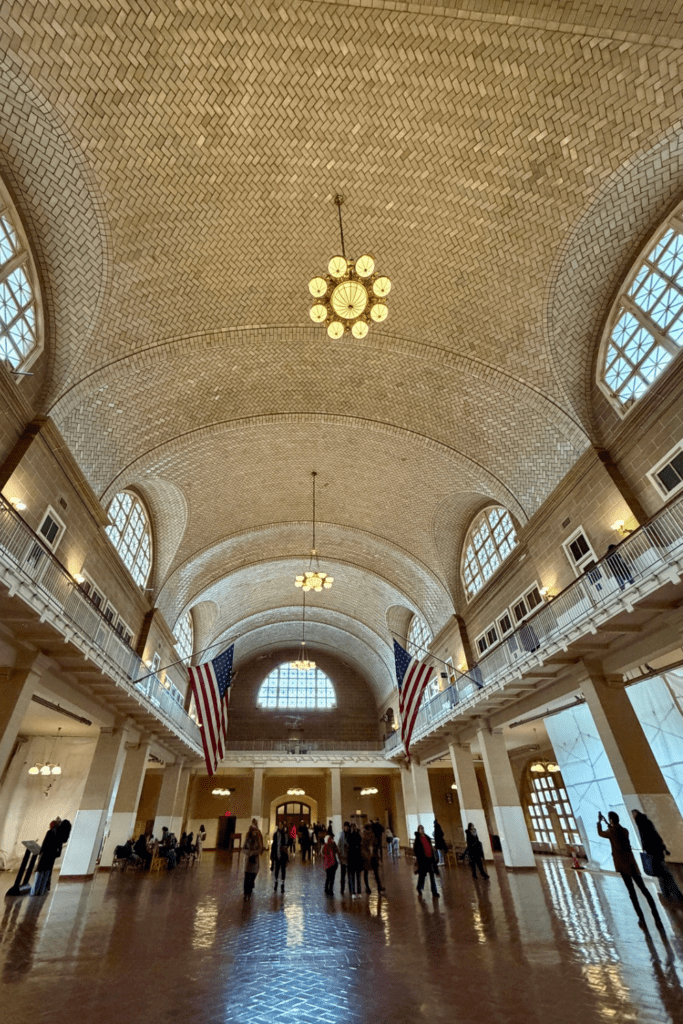
The heart of Ellis Island is the stunning Main Immigration Building, also known as the Great Hall. The space immediately reminded us of Grand Central Terminal, with its soaring ceilings, arched windows, and incredible natural light. Even with parts of the building under renovation during our visit, we were still able to tour much of the main floor and take in the scale and beauty of the architecture.
From a STEM perspective, the building itself sparked great conversations — how engineers designed such a large, open space to safely support thousands of people at once, how natural light was intentionally used before modern lighting systems, and how the building has been preserved and restored over time.
This stop felt especially meaningful because it connected directly back to our trip preparation. Before we left, my son read What Was Ellis Island? as part of how we wrapped this experience gift. Seeing the place in person after learning about it through a book helped transform the history from abstract to tangible — reinforcing why pairing experiences with thoughtful, curiosity-building resources can deepen learning in such a powerful way.
Ellis Island offered a quieter, more reflective counterpoint to Liberty Island. It encouraged us to slow down, read names, look at photographs, and think about how individual lives, design decisions, and systems all come together to shape history.
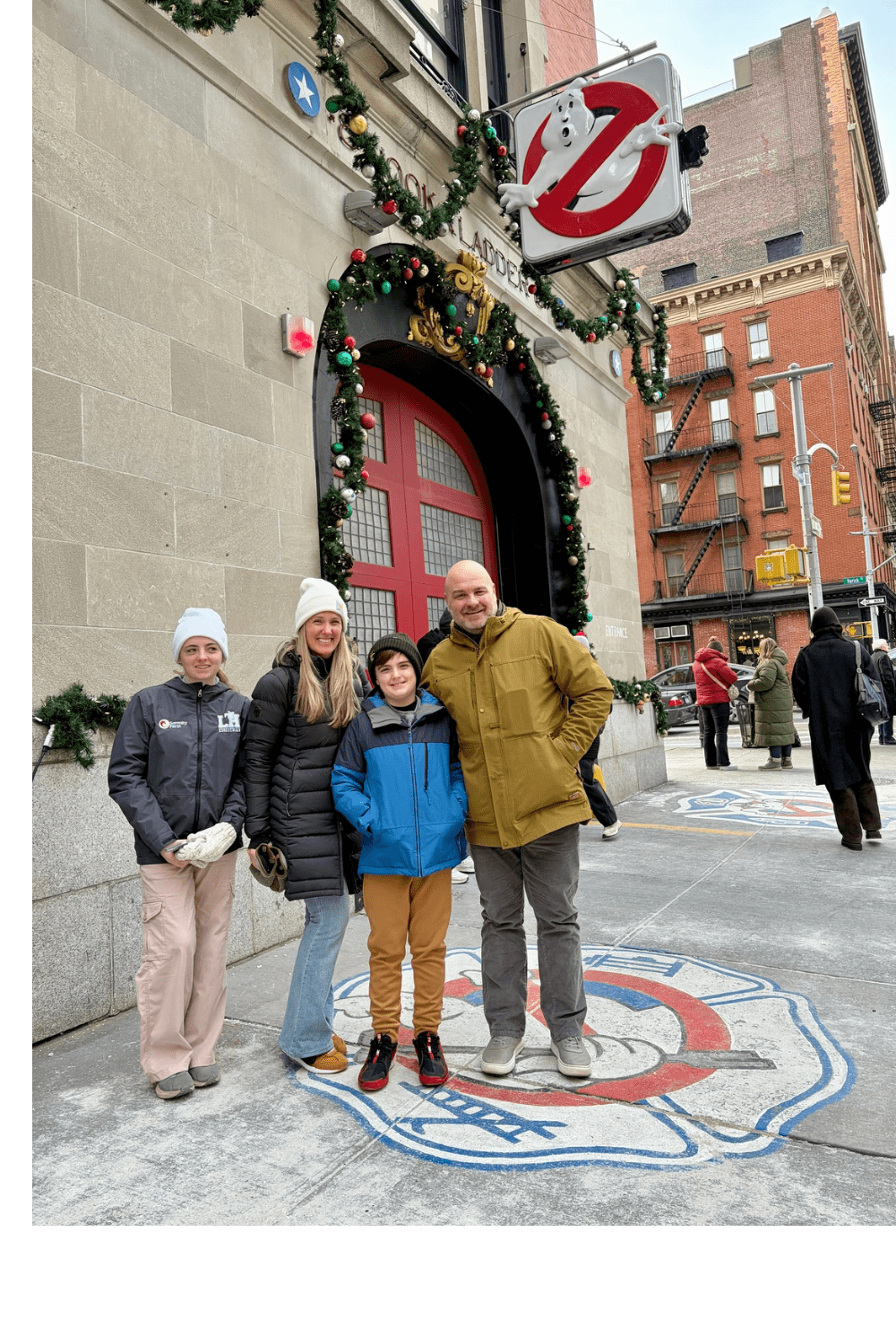
After leaving Ellis Island, we spent the rest of the afternoon exploring Manhattan on foot — grabbing an easy lunch near Battery Park, stopping for a quick photo at the Ghostbusters firehouse in Tribeca, browsing new and secondhand books at The Strand, and treating ourselves to cupcakes along the way. These in-between moments offered their own kind of learning: navigating neighborhoods, observing how architecture changes from district to district, seeing how pop culture, history, and everyday city life intersect, and being reminded that choosing reuse — like buying secondhand books — is a simple, meaningful sustainability practice. It was a reminder that real-world learning often happens between the landmarks.
Sunday: LEGO, One Last Walk & Heading Home
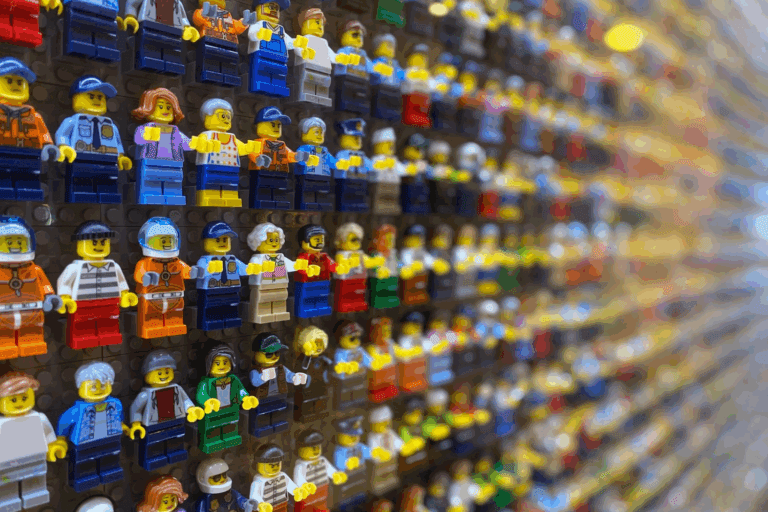
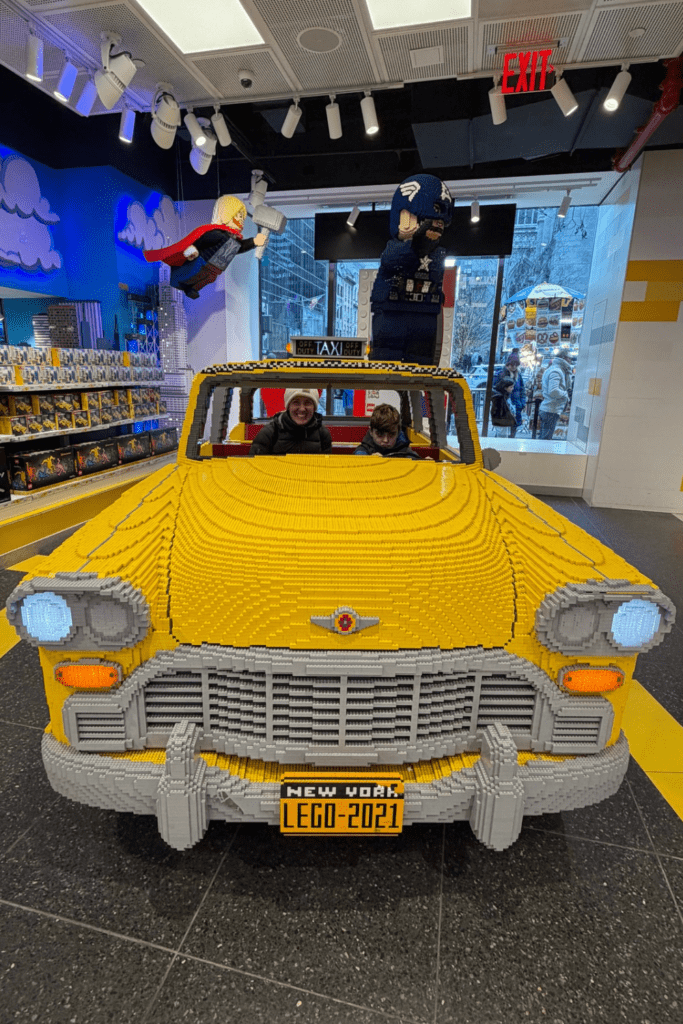
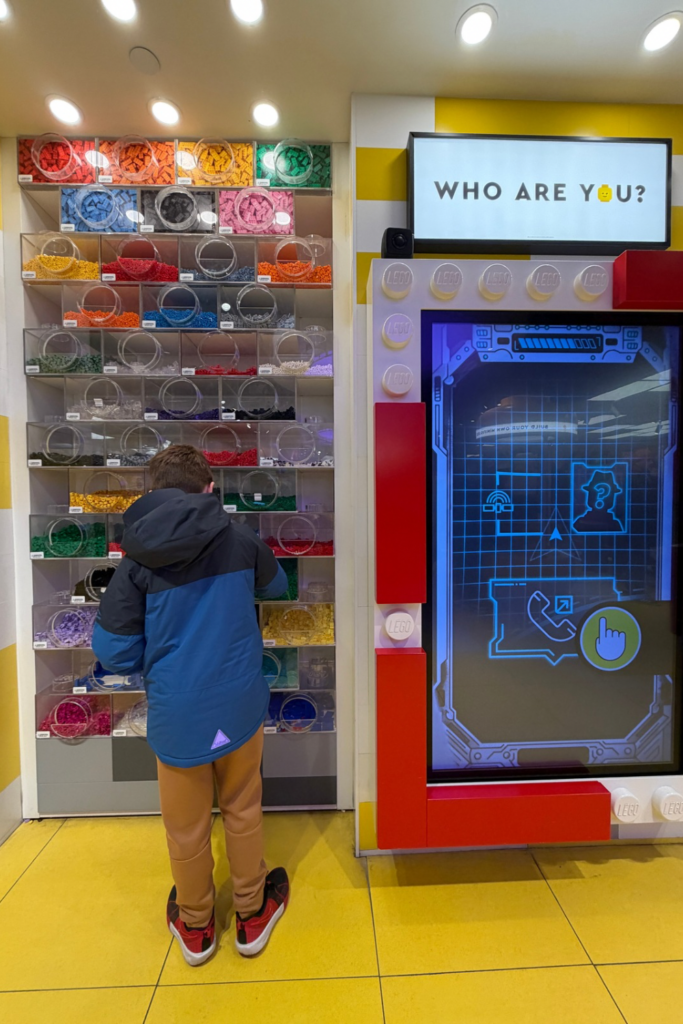
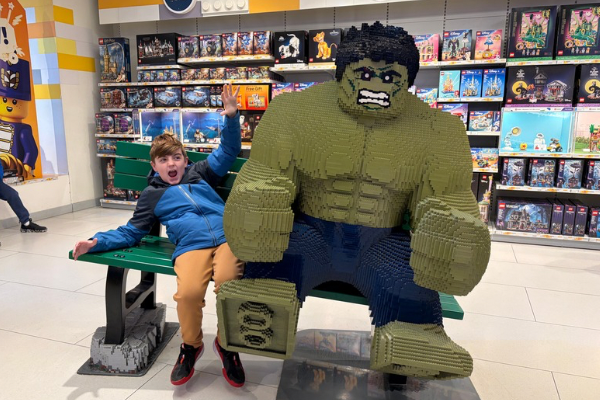
On Sunday morning, we returned to the LEGO Store near Rockefeller Center. Watching my son study the large-scale builds and city models reinforced why LEGO remains such a powerful learning tool — creativity, engineering, spatial reasoning, and problem-solving all in one.
This is exactly why LEGO continues to be a staple in our home and in many of the LEGO STEM challenges I share here.
With our train departing at 1:05 PM, we headed back to Penn Station — specifically the older Penn Station under Madison Square Garden — a small but helpful tip that allowed us to secure seats early.
Why This Trip Felt So Thoughtfully Sustainable
- Traveling by train instead of driving or flying
- Walking between neighborhoods instead of relying on cars
- Learning through museums, architecture, and design
- Choosing experiences over souvenirs
- Letting curiosity — not a checklist — guide the trip
New York City is often described as overwhelming, but experienced thoughtfully, it becomes an incredible outdoor classroom. Engineering, art, history, sustainability, and storytelling are everywhere — you just have to slow down enough to notice.
This weekend reminded me (again) that some of the best STEM learning doesn’t come from a kit or a lesson plan — it comes from walking, wondering, and exploring together.