5 Easy Ways to Reuse Plastic Bottles for Science Activities
Before you toss that empty plastic bottle into the recycling bin, consider turning it into a hands-on science activity instead. Reusing plastic bottles for science activities is an easy and affordable way to teach kids about STEM concepts while reducing waste at home or in the classroom.
From simple engineering challenges to creative environmental science lessons, plastic bottles can become powerful learning tools. These low-prep STEM activities encourage curiosity, problem-solving, and conversations about sustainability using materials you already have on hand.
According to the Container Recycling Institute, the United States produces around 70 million plastic beverage bottles per day. This translates to approximately 25.5 billion plastic bottles and bottle caps per year.
That’s a lot of plastic bottles!
Finding creative ways to reuse plastic bottles is an easy step toward reducing household waste while creating meaningful learning opportunities for kids. From simple engineering builds to hands-on science experiments, empty water bottles and other plastic containers can become valuable tools for STEM learning.
That’s why I’ve put together this list of 5 ways to reuse plastic bottles for science activities that encourage curiosity, creativity, and sustainability all at once.
Choose to Reuse Plastic Bottles for Science Activities
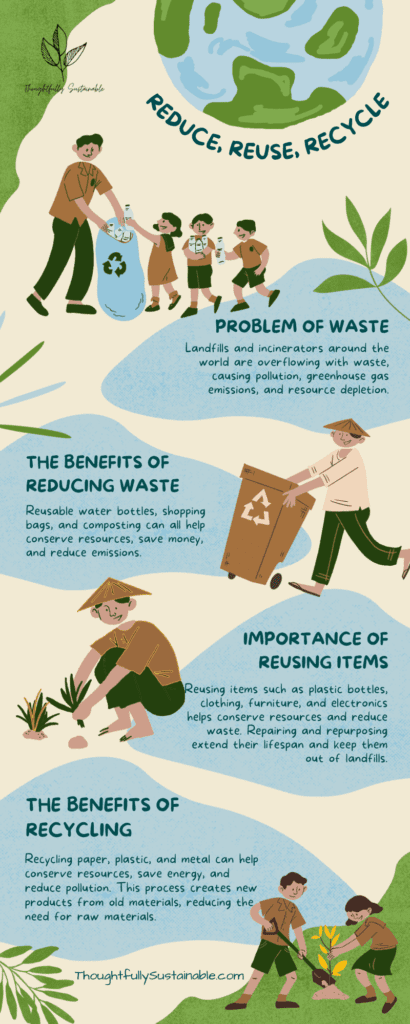
Both reusing and recycling plastic water bottles, drink containers and laundry jugs are a great way for reducing waste and preserving resources, but reusing is generally considered to be better than recycling for a few reasons:
- Reusing avoids the energy, natural resources, and monetary resources required for recycling. When you reuse an item, you’re able to extend its lifespan and keep it out of the waste stream, which means that it doesn’t need to be processed for recycling. Recycling requires significant amounts of energy and resources to collect, sort, and process materials, so reusing is a more efficient way to reduce waste.
- Reusing can be done multiple times. Many items can be reused multiple times before they need to be recycled, which means that they can provide even greater benefits in terms of waste reduction and resource conservation.
- Reusing promotes a circular economy. Reusing items within the same community or organization can create a closed-loop system in which waste is minimized and resources are conserved. This type of circular economy is more sustainable and resilient than a linear economy based on production, consumption, and disposal.
That being said, recycling is still an important way to reduce waste and conserve resources, especially for items that can’t be easily reused. Ultimately, the best approach to waste reduction is to prioritize reusing whenever possible, and to toss recyclable materials in the recycling bin when reuse is no longer feasible.
What Types of Plastic Bottles Are Best for Science Activities?
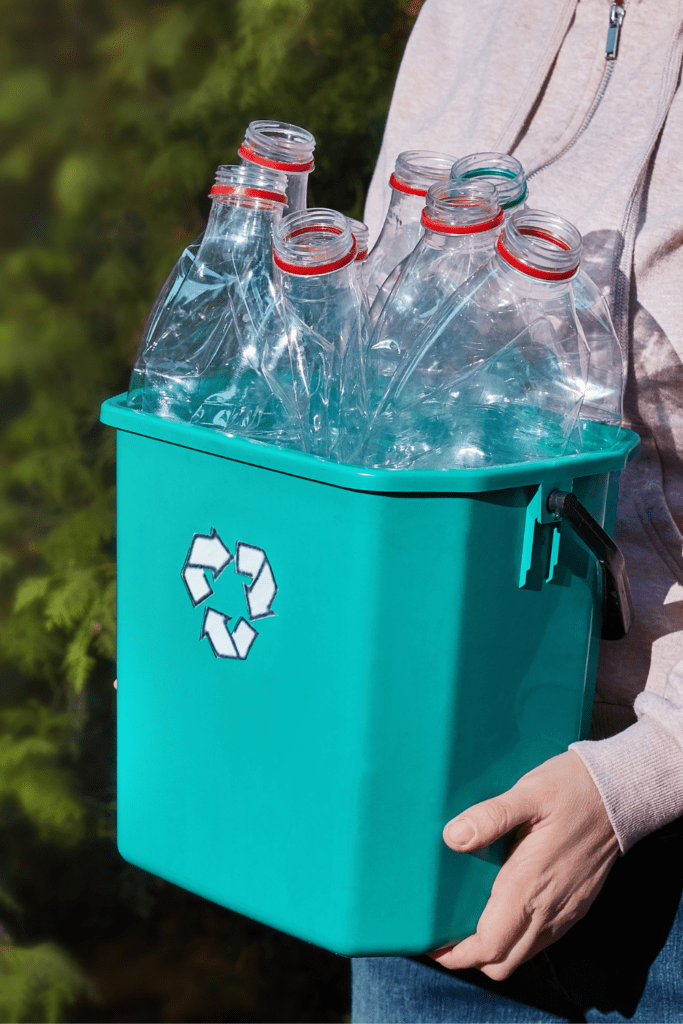
In the United States, the most common plastics used in plastic containers and bottles are polyethylene terephthalate (PET) and high-density polyethylene (HDPE).
PET is a lightweight, strong, and transparent plastic that is commonly used in soda, water, and juice bottles. It is also used in other food and non-food packaging applications such as jars, trays, and films. The recycling number for PET plastic is #1, which is usually found on the bottom of the plastic bottle or container inside a triangle made of arrows
HDPE is a heavier, opaque plastic that is commonly used in milk, detergent, and shampoo bottles. It is also used in other applications such as toys, buckets, and pipes. The recycling number for HDPE plastic is #2, which is also usually found on the bottom of the plastic bottle or container inside a triangle made of arrows.
Both PET and HDPE are lightweight, durable, reusable, and easily accessible, making them fantastic materials for reusing plastic bottles for science activities!
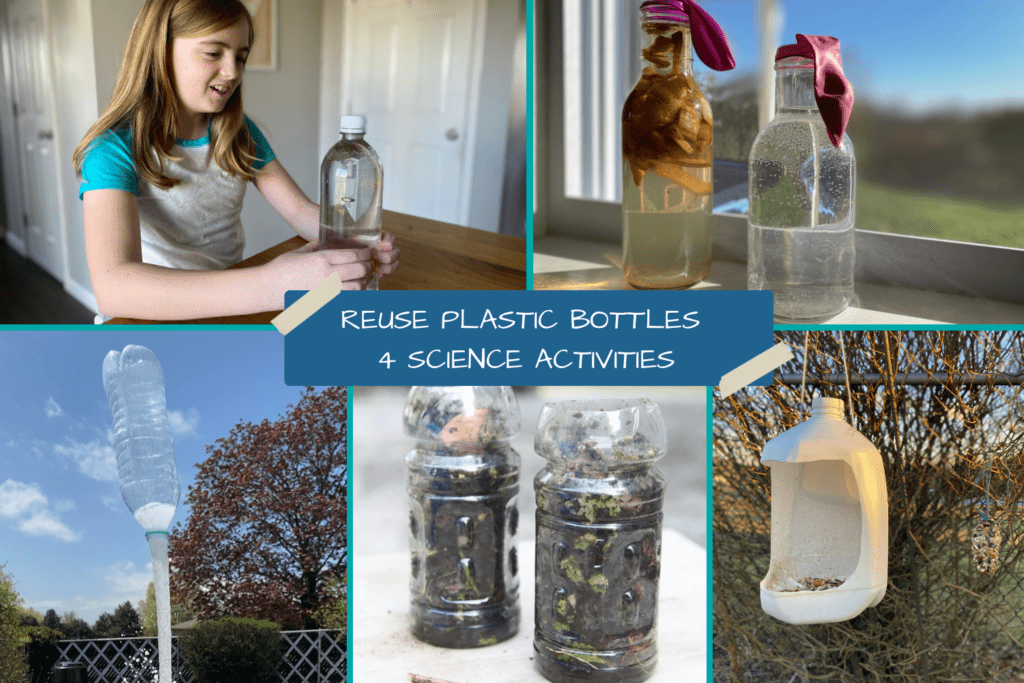
5 Ways to Reuse Plastic Bottles for Science Activities
Here are a list of easy ways that single-use plastic water bottles, plastic soda bottles, milk jugs, and other everyday items can be utiized to create simple projects for science investigations, earth day celebrations, and art classes that the entire family can learn from.
Build an Alka-Seltzer-Powered Rocket
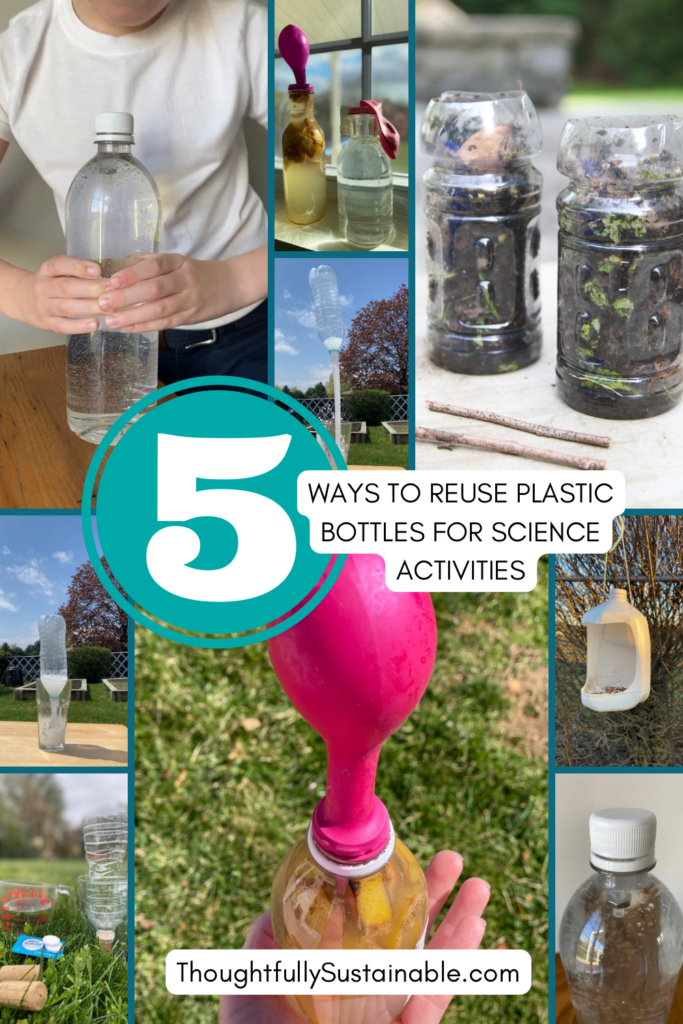
Do you have empty plastic bottles and some Alka-Seltzer tablets? Then you have the materials for an Alka-Seltzer rocket science experiment, no hot glue needed! Click here to learn how to transform a single-use plastic water bottle into a rocket using simple acid-base chemistry.
Create a Cartesian Diver
You may have seen a Cartesian diver demonstration before, where a small, air-filled object moves up or down inside of a reusable plastic bottle, depending on how hard the bottle is squeezed. Did you know that this simple science experiment can be used to teach multiple physics concepts? Perfect for multiple age groups and abilities, the creation of a Cartesian diver can be used to address Boyle’s Law, buoyancy, Archimedes’ Principle and the reuse of materials! Learn how to make one here.
Construct a Soil-arium
What if we could break down composting for kids so they could see it happening with their own little eyes on a kid-sized scale? Wouldn’t that be fun?
Over on Raising Global Kidizens, we created a simple sustainability science experiment for kids to learn how to build a soil-arium using plastic bottles! A soilarium is a clear container packed with composting ingredients to make a loamy soil amendment that kids can use as their own little science laboratory. Read on for instructions and a downloadable workbook to teach kids how to conduct their own composting experiment by building a soil-arium.
Learn About Landfills
Allow kids to observe how food waste produces gas during decomposition with this simple sustainability science experiment that utilizes food scraps and single-use plastic bottles. Read on get the full instructions to try this science experiment and simulate how food scraps in our landfill emit potent greenhouse gases into our atmosphere.
Make a Backyard Bird Feeder
Have any drink cartons, soda bottles or milk jugs? Then you’ve got the makings for a birdfeeder! Children innately want to be helpful, so why not let them be in charge of feeding the backyard birds? In return, they’ll get to observe and identify the feathered friends (and any resident squirrels or rabbits) that reside in their community. Follow these simple step-by-step instructions to create a bird feeder.
Have any other suggestions for creative ways to transform reusable water bottles for science activities? Leave your great project ideas in the comments below!
More Ways to Introduce Sustainability to Kids
Looking for more low-prep STEM activities and sustainability projects for kids? Subscribe to the free Thoughtfully Sustainable newsletter for hands-on science ideas, outdoor learning activities, and simple ways to explore sustainability with your learners.